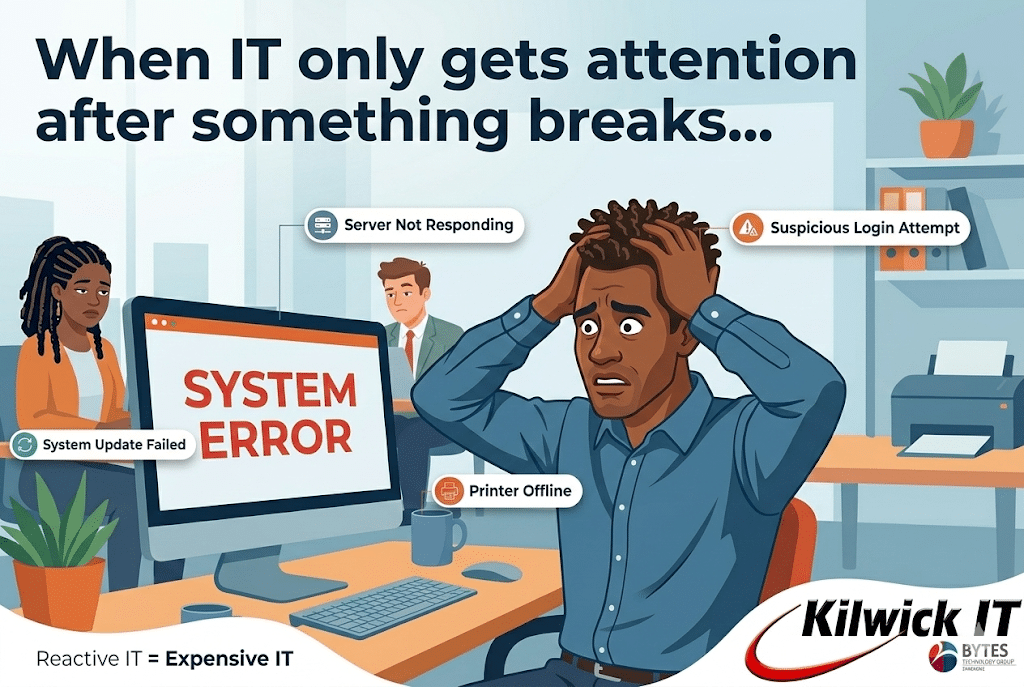
Cyber threats – Are you prepared?
The cybersecurity landscape isn’t slowing down it’s getting smarter. Attackers are using automation, outsourcing ransomware tools, and exploiting trust in software and people alike.
Here’s a snapshot of the key threats shaping the digital battleground today:
- AI-Powered Phishing and Scams
Cybercriminals are using artificial intelligence to craft very convincing phishing messages and fake communication (emails, texts, even voice). These
AI-generated scams are harder to spot and trick even experienced users. -cybersecjournal.com
- Ransomware as a Service (RaaS)
Ransomware is now sold like software: criminals rent ready-to-use hacking tools on underground markets. This means even beginners can launch attacks. Reports indicate attackers don’t just lock files anymore, they often ‘steal data first and extort victims twice’
- Supply Chain and Third-Party Vulnerabilities
Rather than attacking big targets directly, hackers are increasingly compromising suppliers or third-party software libraries. One weak link in the software supply chain can expose thousands of companies. -cybersecjournal.com
- Cloud Security Gaps
With so much data and infrastructure in the cloud, misconfigurations are a major entry point for attackers. -Medium
- Deepfakes and Social Engineering
Tools that create realistic fake audio (and less so video) are becoming more common. Attackers can impersonate executives or trusted contacts to trick employees into handing over sensitive access. -Medium
- Internet of Things (IoT) Vulnerabilities
Every device connected to the internet — from cameras to smart sensors — is a potential entry point. Many IoT devices lack strong security and can be hijacked to steal data or launch network attacks. -Codebridge
- Zero-Day and Fast Exploits
New vulnerabilities that software makers don’t know about are being weaponised faster than patches can be released, making rapid response and patching more critical. -Medium
Staying secure now means combining strong technology (like multi-factor authentication and secure cloud configurations) with smart habits including ongoing training.
- Pay attention!
- Slow down.
- Don’t click blindly, verify before you click, download, or trust.
- Use strong, unique
- Enable multi-factor authentication.
- Update everything.
- Back up your data.